High‑Throughput Fischer–Tropsch Catalyst Testing System
Overview
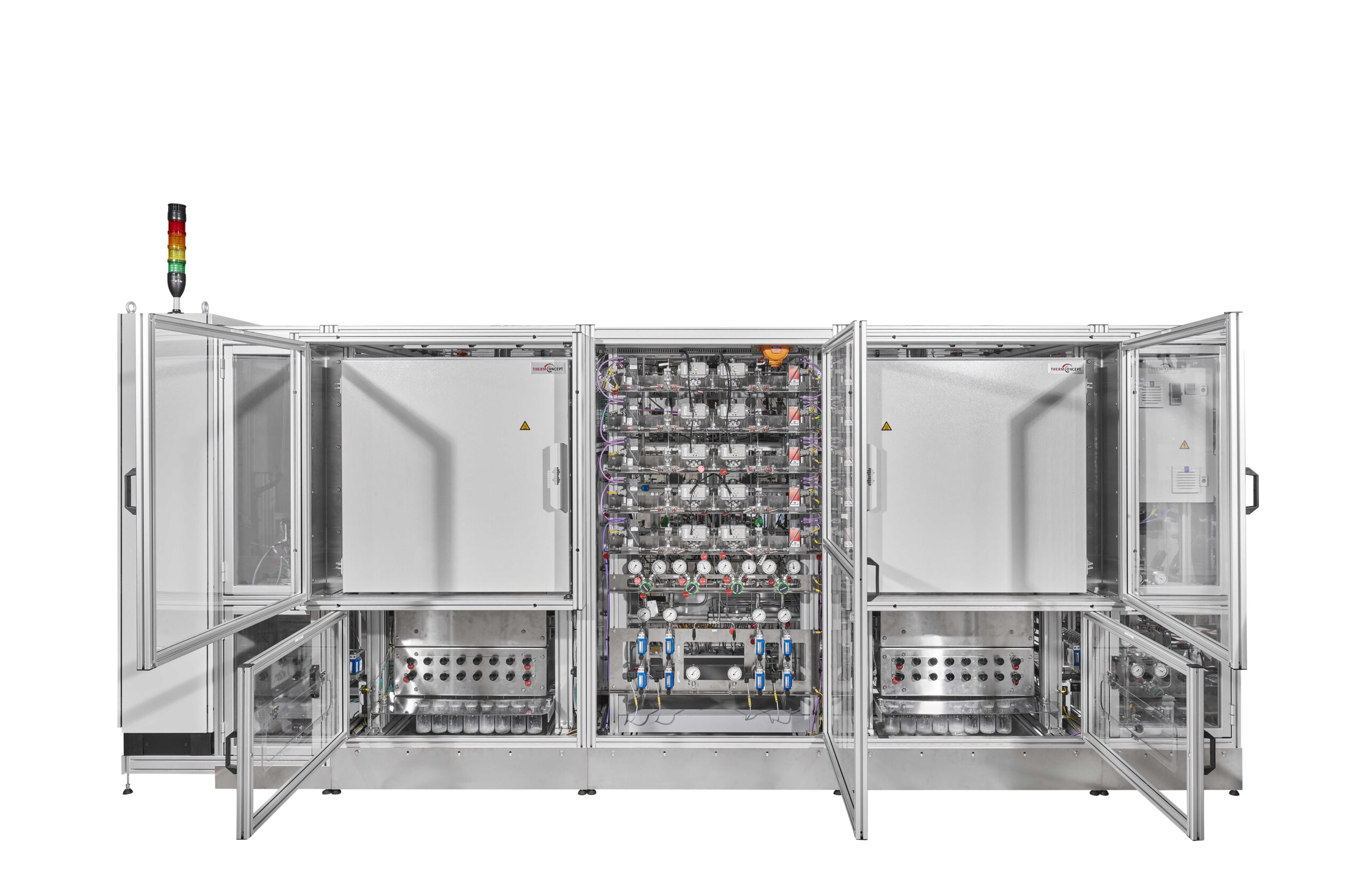
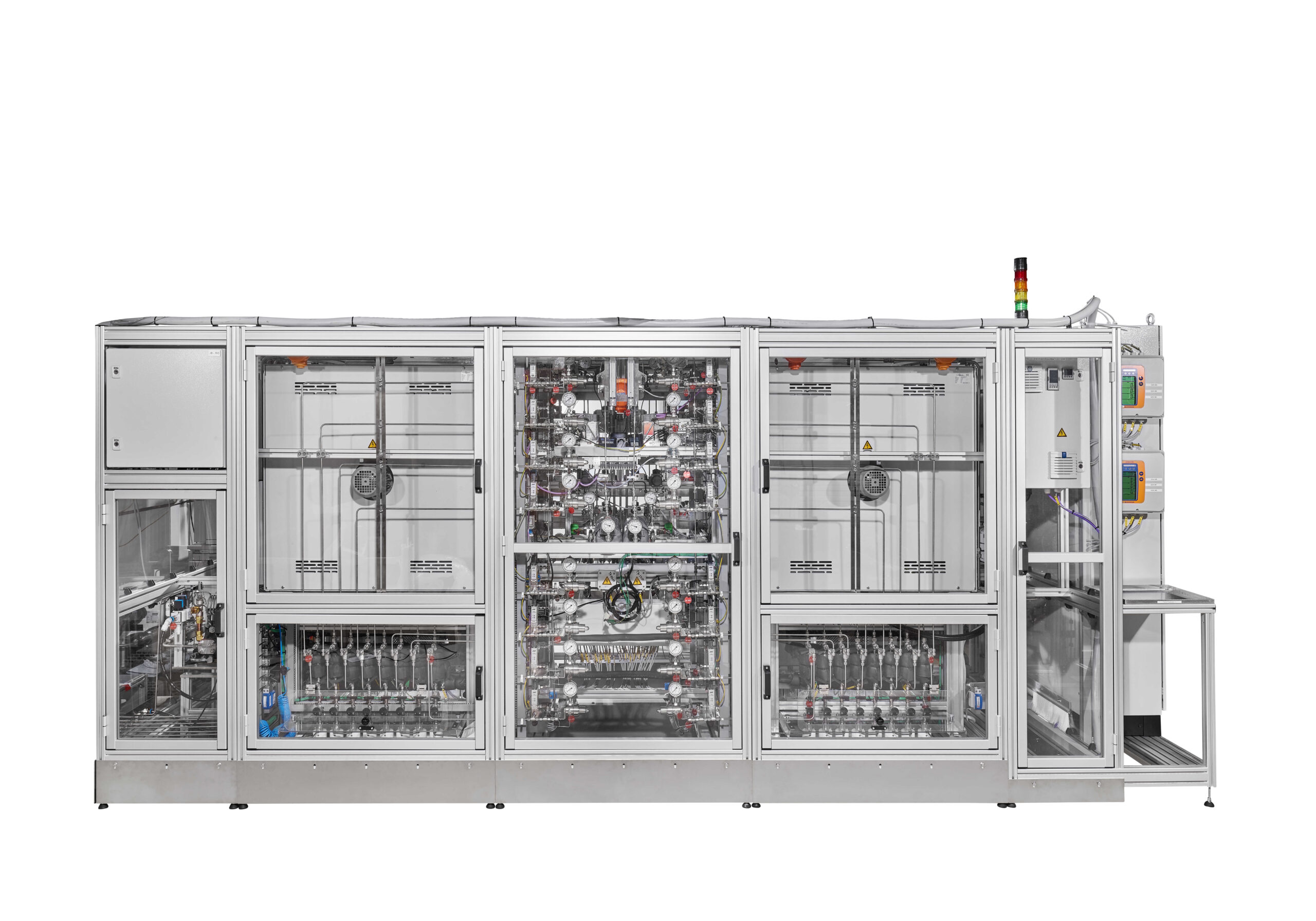
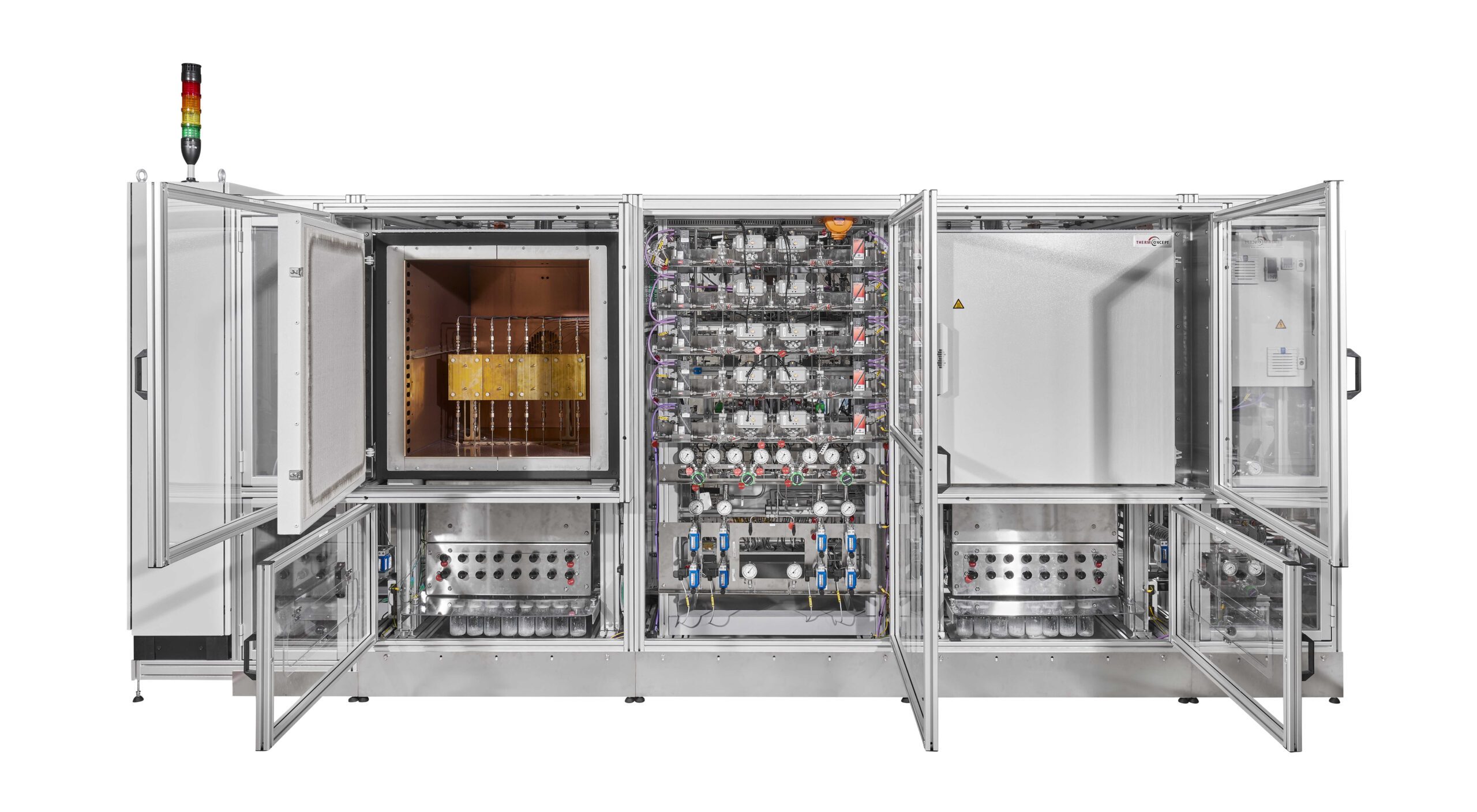
A high-throughput Fischer–Tropsch testing system for 16-fold parallel catalyst evaluation with integrated two-stage liquid product separation and dual-GC online analysis.
Design Parameters
- Design temperature: 500 °C
- Design pressure: 100 bar
Reactor and Process Features
- Two reactor blocks, each with 8 fixed‑bed reactors
- Inner diameter: 4 mm
- Height: 200 mm
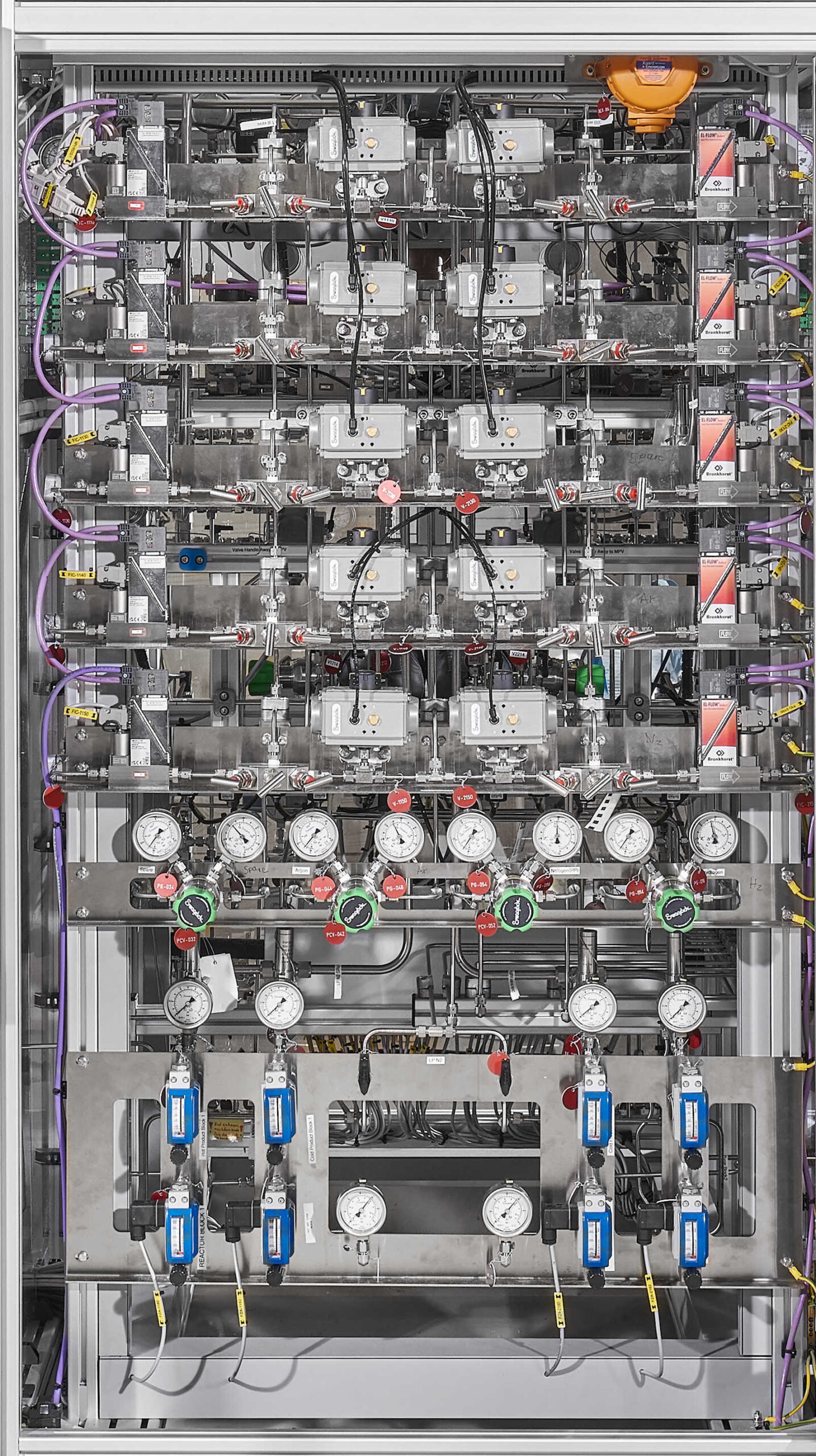
- Individually adjustable gas flow rate and pressure for each reactor
- Individual manual product collection / withdrawal
- Automatic sampling
- Connected to two online gas chromatographs
Automation and Control
- Process control system: Siemens S7‑1500
System Design
Our customer, a catalyst manufacturer from the chemical industry, was facing a growing demand for high-throughput testing in quality control. Increasing test capacity while maintaining flexibility and operational reliability across a large number of parallel experiments was critical. At the same time, the system needed to be rapidly deployable and ready for continuous operation with minimal downtime.
To address these requirements, PROREC developed a high-throughput Fischer–Tropsch test system based on a modular parallel reactor architecture with 16 fixed-bed reactors arranged in two independently operable blocks. The feed section integrates precise gas dosing and a dedicated carbonyl purification reactor to protect catalyst integrity during operation. Downstream, a two-stage liquid-fraction collection system enables reliable sampling and recovery of reaction products. Automated sampling with two integrated gas chromatographs (GCs) enables continuous online analysis of all reactor outputs.
The system is designed for fully automated, unattended 24/7 operation, supported by recipe-based control and continuous data acquisition. The combination of high parallelisation, robust process control and integrated analytics significantly increases testing capacity while ensuring reproducible, high-quality catalyst performance data under industrially relevant conditions.